
Queenstown Lakes Conifer Succession Plans
Our decades-long approach to restoring resilience in Queenstown Lakes reserves
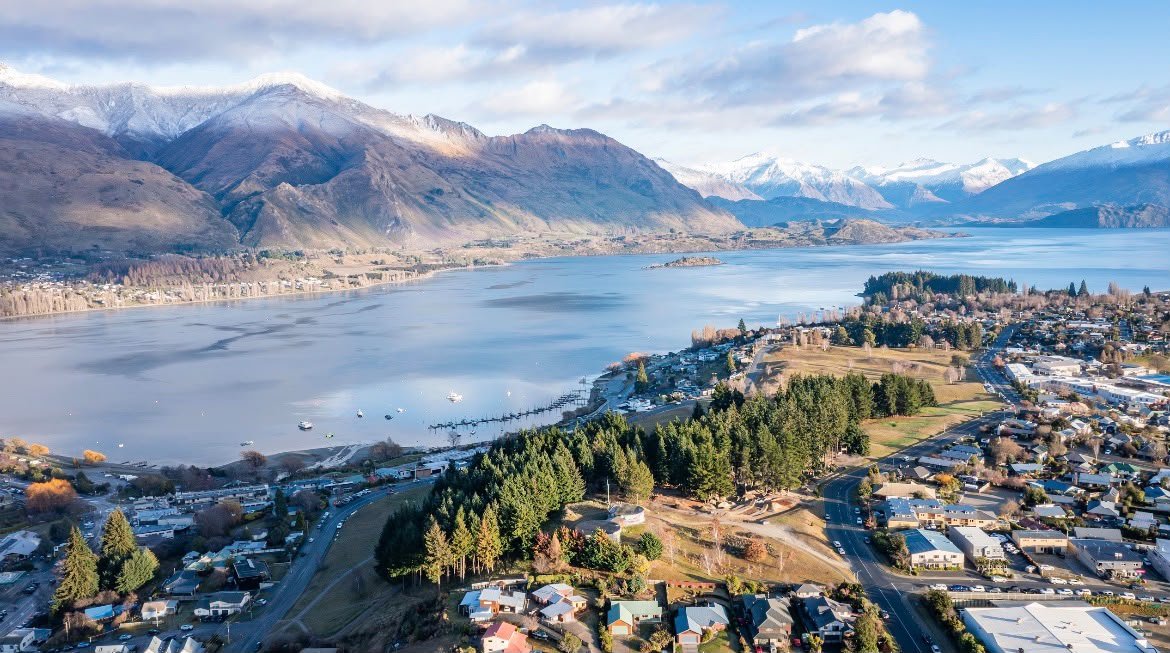
Wānaka from above - Lee Rowley
Queenstown and Wānaka are the postcard vision of Aotearoa. Here, the lakes, the mountains, and the trees all come together to create landscapes that feel wild and untouched. It’s the version of New Zealand thousands of people travel across the world to see.
And while visitors and residents alike bring energy and vitality to these places, some “visitors” to the landscape have less positive effects. Much of the tree canopy of these places is made up of introduced species, including wilding conifers.
Tend Tree Consultancy has been working with Queenstown Lakes District Council to prepare for the future while restoring native ecosystems. By strategically planning the removal and replacement of undesirable conifers with native and suitable exotic species, we’re helping transform two landmark reserves into spaces that reflect the ecological and cultural values of this unique environment.
Windbreaks to Wind Seeding
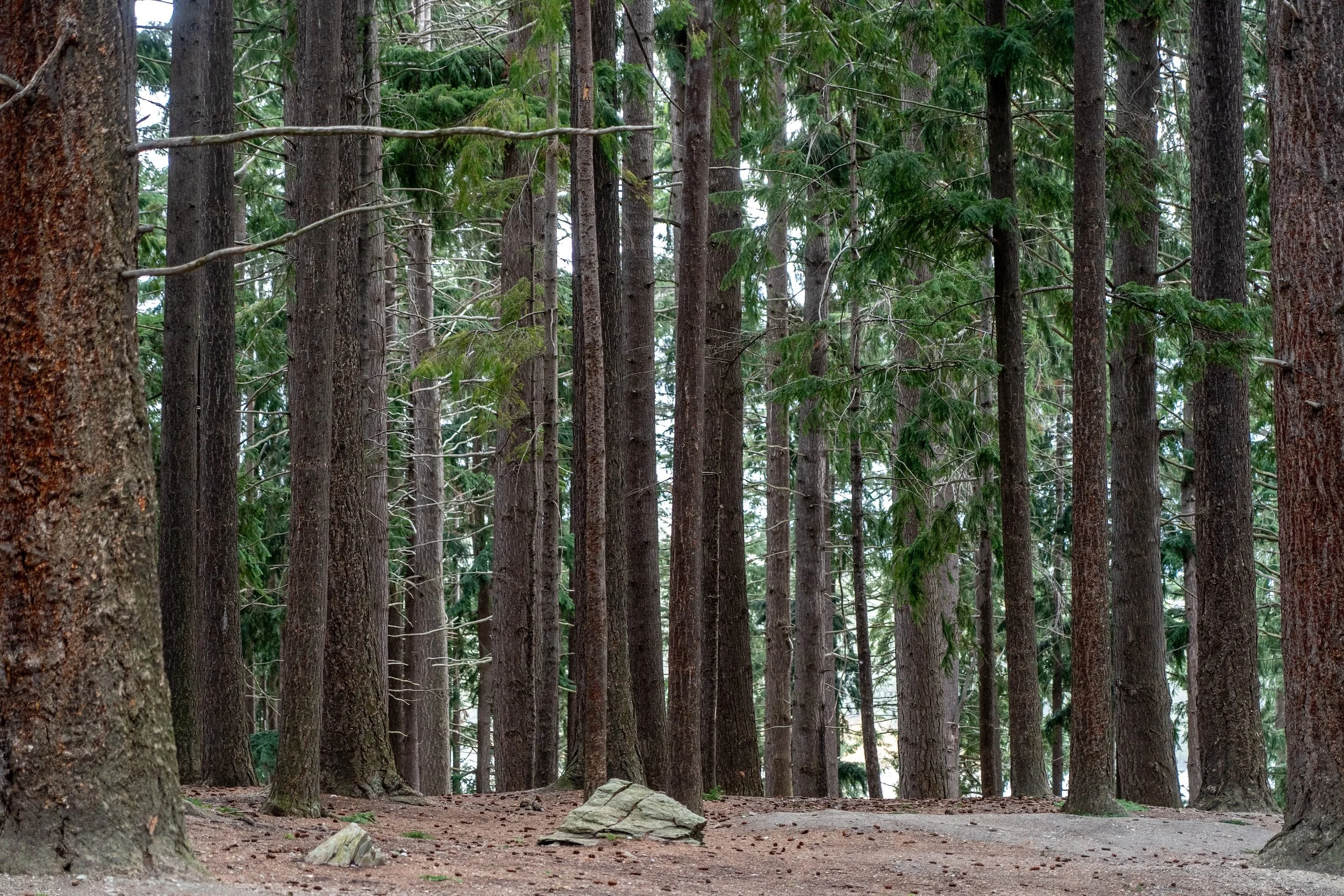
Exotic Conifers in Queenstown Botanic Gardens
In Queenstown Lakes, what began as shelter has become a spreading ecological challenge.
Conifers were introduced to New Zealand in the mid-1800s as windbreaks and played an important role in the development of agriculture. With ideal climatic conditions, and few of their natural pests or pathogens to contend with, they quickly flourished throughout the country. Today, they form the basis of much of the nation’s commercial forestry industry, contributing $3.5 billion annually to the economy. However, outside managed plantations, these same species can spread unchecked, threatening indigenous ecosystems.
Their dense canopies block sunlight, suppress understory growth, and disrupt natural regeneration, reducing habitat for native plants and animals.
In the Eely Point and Queenstown Gardens areas, there are two conifer species that are of particular focus.
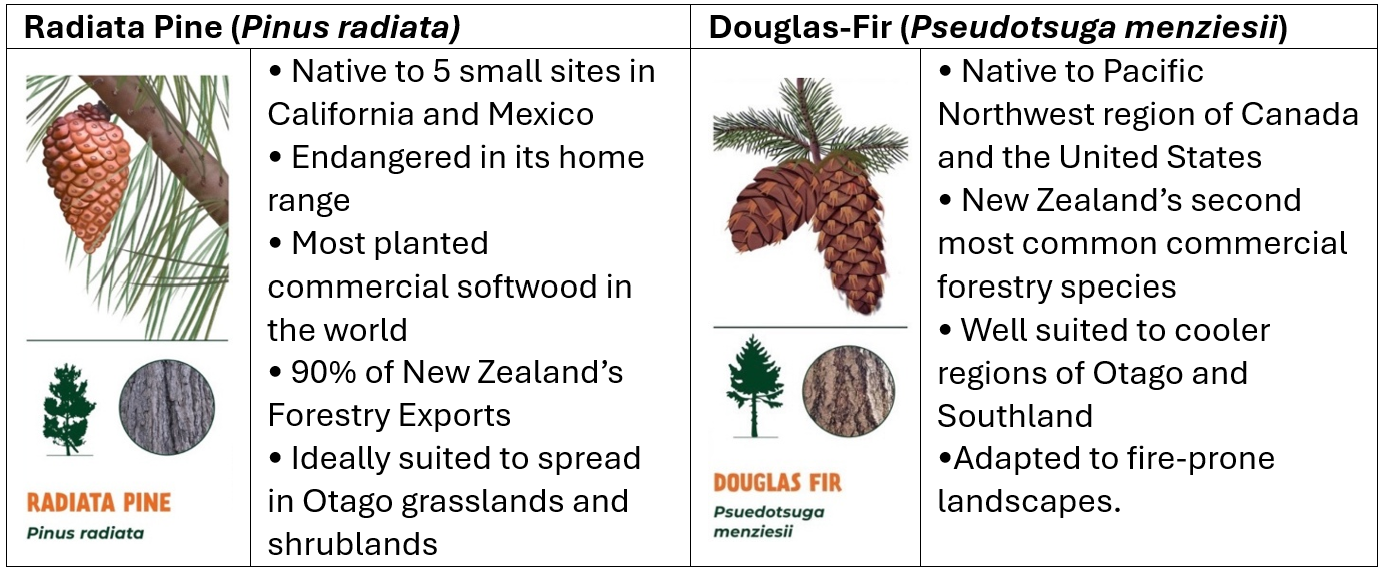
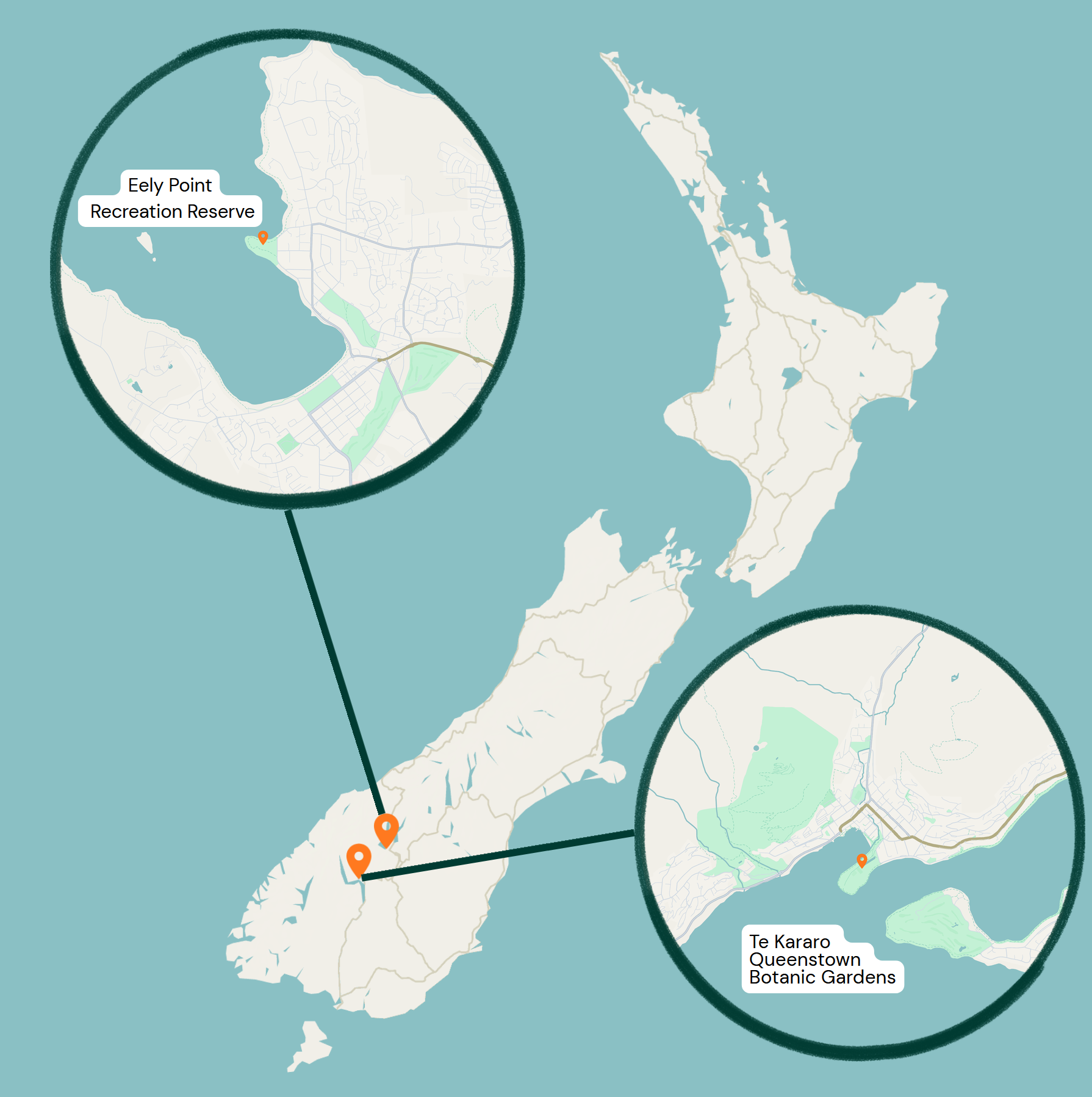
Setting the Scene - Queenstown Gardens and Eely Point
Te Kararo Queenstown Gardens and Eely Point Recreation Reserve are lakeside peninsula parks in the Queenstown Lakes District. Queenstown Gardens sits in central Queenstown, while Eely Point is around 1 km from the Wānaka CBD. Both sites sit on glacial peninsulas on the eastern side of the Southern Alps, where wetter beech forests of the west coast give way to the dry scrublands of central Otago.
Before human arrival, both areas were covered in lowland forest. As human settlement began, these forests were burned to support hunting and food production. By the late 1800s and early 1900s, the original forests were largely gone, and Douglas-fir and radiata pine were introduced to these exposed peninsulas as shelter from winds rushing over the lake.
But herein lies the problem. This combination of an exposed peninsula alongside a windy lake creates the perfect conditions for wind-driven dispersal. In a setting like this, seeds from pines or Douglas-fir can spread several kilometres from their parent tree.
So why not just remove them all?
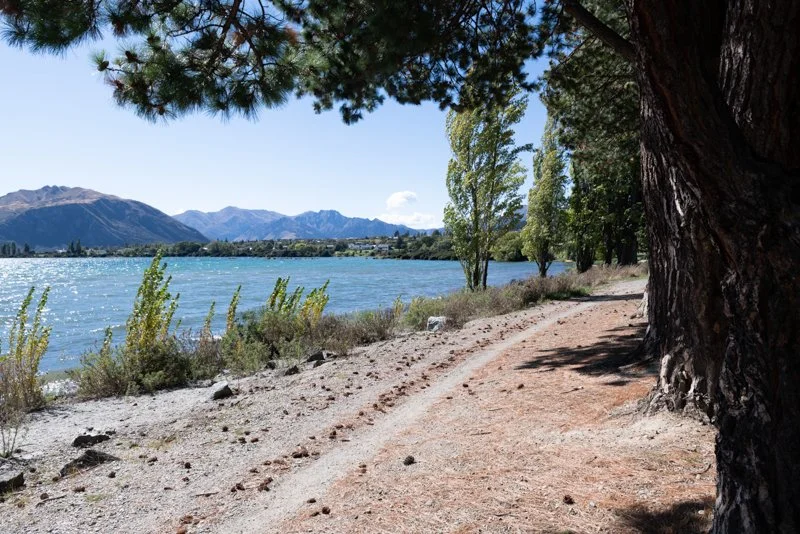
Image Source: filmotagosouthland.com
When rewilding areas that have been colonized with undesirable conifers, it may seem like the most obvious solution is to remove them and start from scratch. In the long term though, this may cause more problems than it solves.
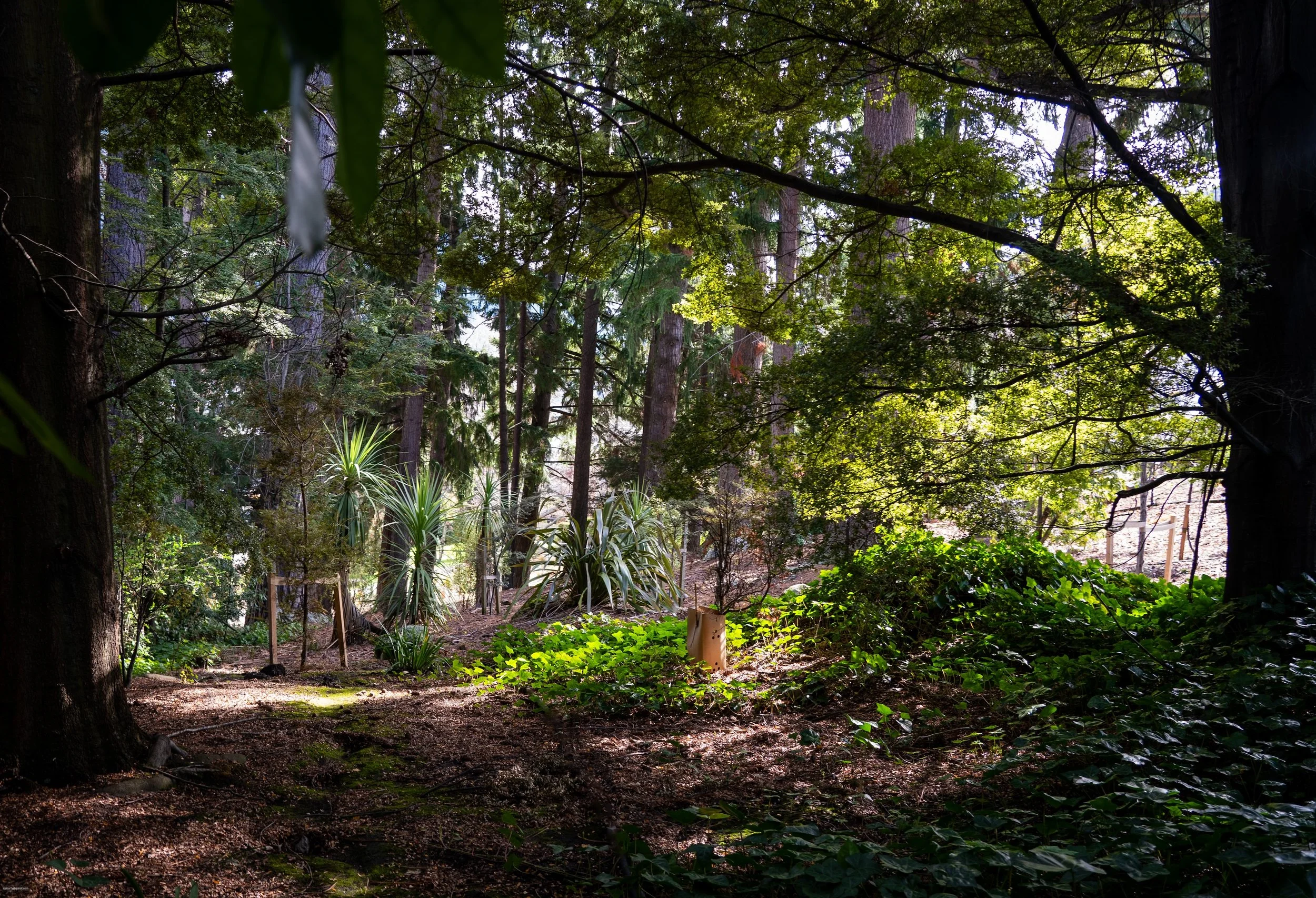
Understory plants establishing under exotic conifers - Lee Rowley
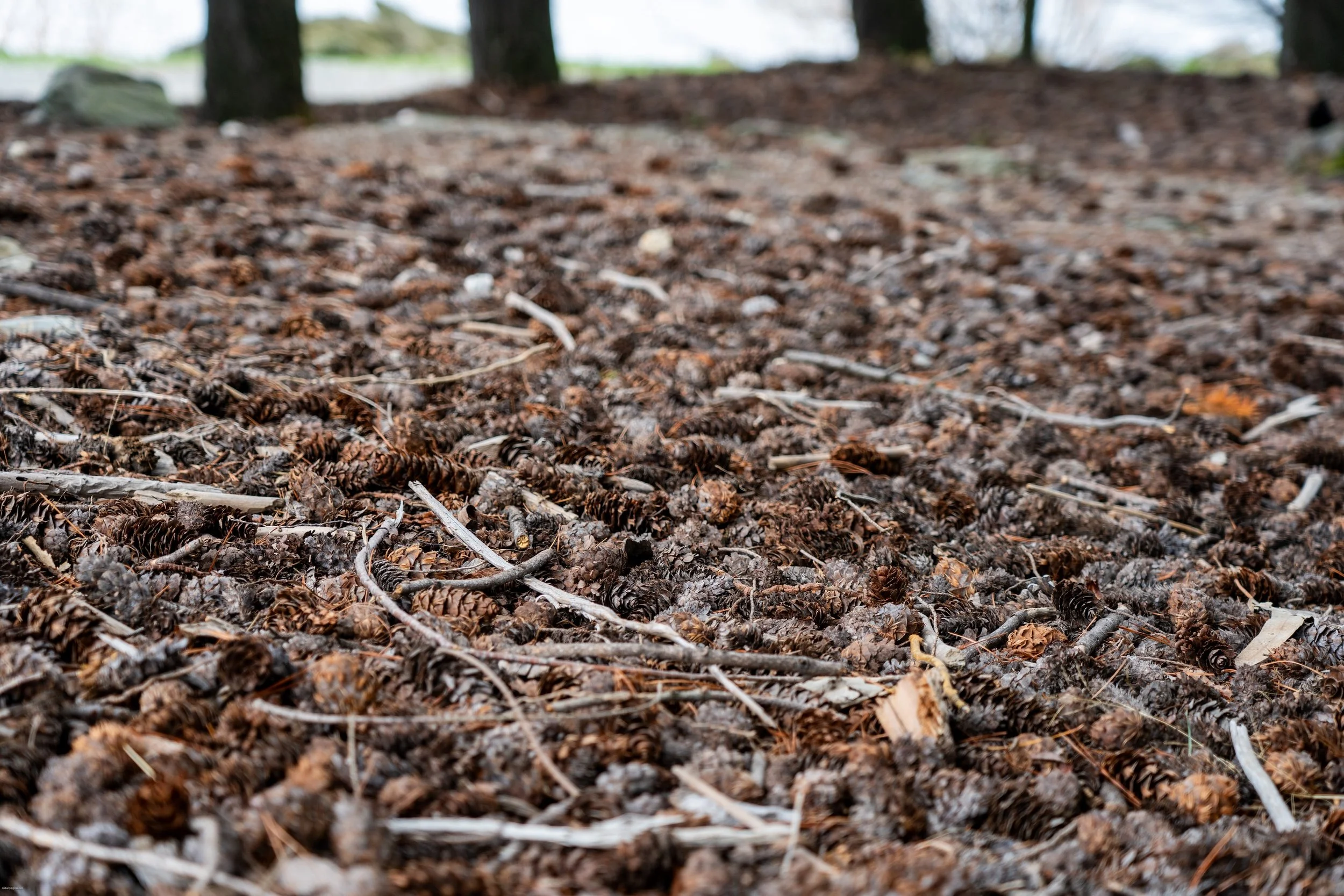
Leaf litter and tree debris blanketing and protecting the soil - Lee Rowley
Crowded House: New Zealand endemic tree and shrub species are often much slower growing than those introduced for forestry. Additionally, native forest regeneration in dry areas like Central Otago is much slower than in high rainfall areas along the coasts. This slower regeneration rate provides a window for the faster-growing exotic species to take hold, crowding out growing areas before the native species can get a foothold.
Sunburn Potential: Many native tree species start their lifecycles in the dappled light of the cool forest understory with taller trees providing shelter from the sun. Sudden removal of taller mature trees can cause stress in remaining saplings, and make it difficult for new trees to establish.
Winds of Change: Trees naturally adapt their structure to withstand wind over time through a process known as thigmomorphogenesis. If they adapted to an environment sheltered by nearby trees, removing that shelter can result in branch or complete tree failure of the trees we wish to retain. Removing trees gradually rather than all at once allows the remaining trees and landscapes to adapt while transitioning to a more diverse canopy.
Runoff Effects: Trees intercept rainfall through their canopies, slowing and allowing water to gradually infiltrate the soil instead of pooling or quickly running off. Leaf litter also cushions the ground reducing erosion of organic matter as droplets strike. Removing trees all at once can lead to increased surface runoff that can potentially overwhelm stormwater systems, and wash away the loose nutrient-rich topsoil needed to establish new growth.
Our Plan – From exotic monocultures to biodiverse gathering spaces
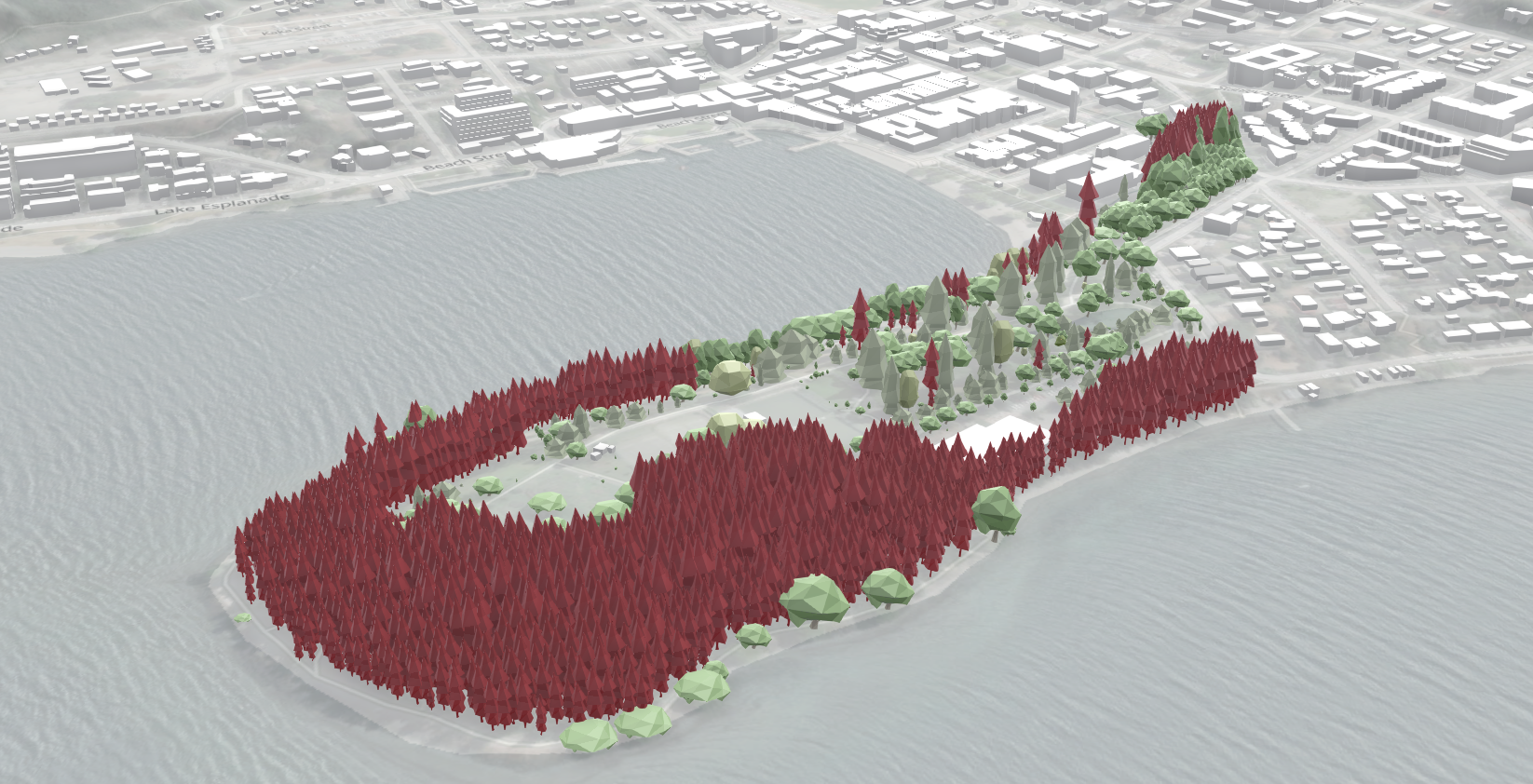
Image Source: Te Kararo Queenstown Gardens Conifer Succession Plan StoryMap
Both Queenstown Gardens and Eely Point are valued recreation and tourism spaces for the residents and visitors to Wanaka and Tāhuna Queenstown. To both preserve and enhance these places for generations to come, we had to think long-term. Nature moves slowly, and to maximize outcomes, Tend Tree Consultancy has proposed phased succession plans that reflect this pace, spanning several decades.
Assessing the Site
To start, we used LiDAR (Light Detection and Ranging) technology to create 3D models of the tree canopies at both locations. With these models, we identified groupings of trees and the gaps between them to divide each site into “Zones”. This creates an overview of the whole area, while also allowing us to target management where it’s needed most.
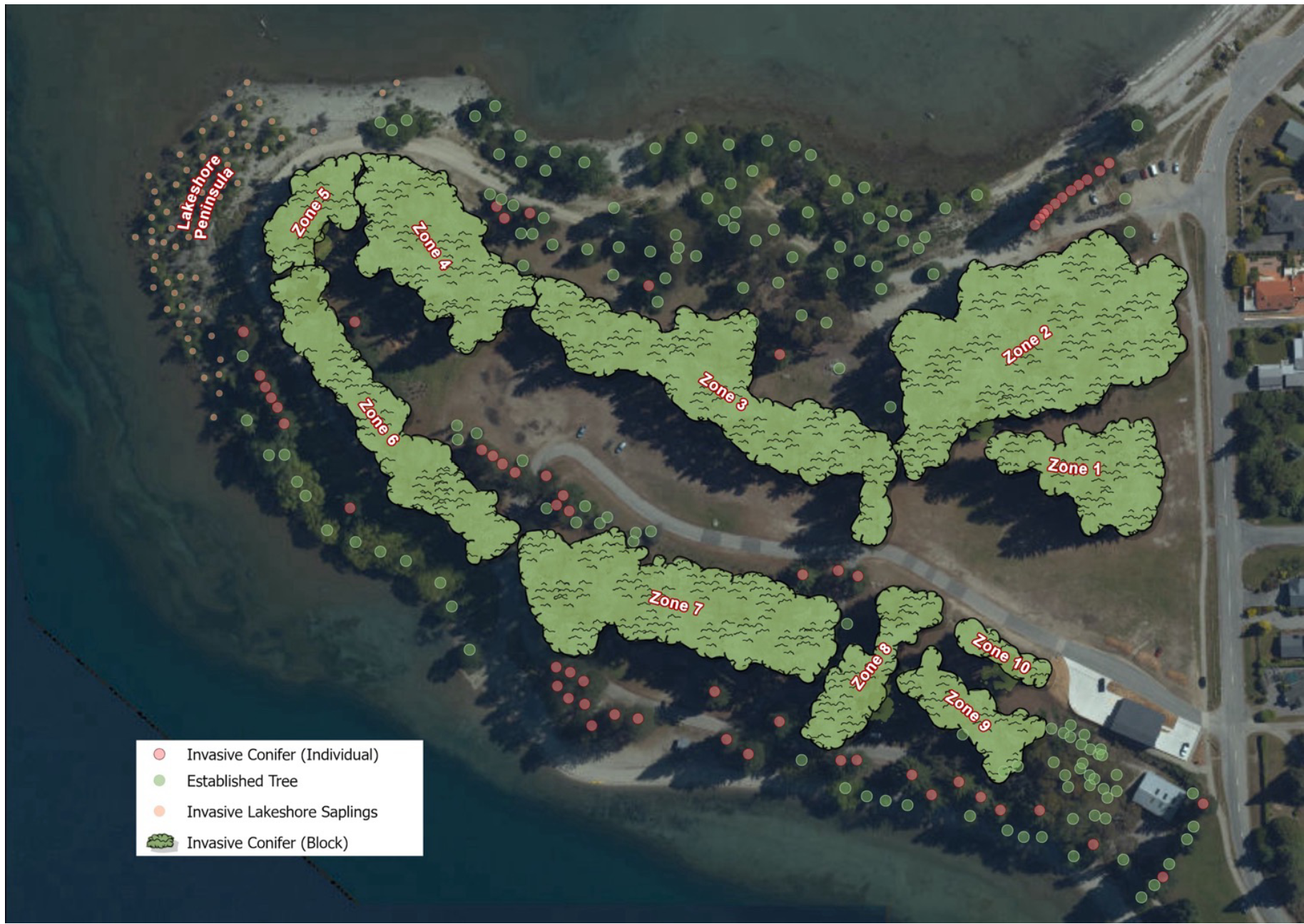
Eely Point Management Zones
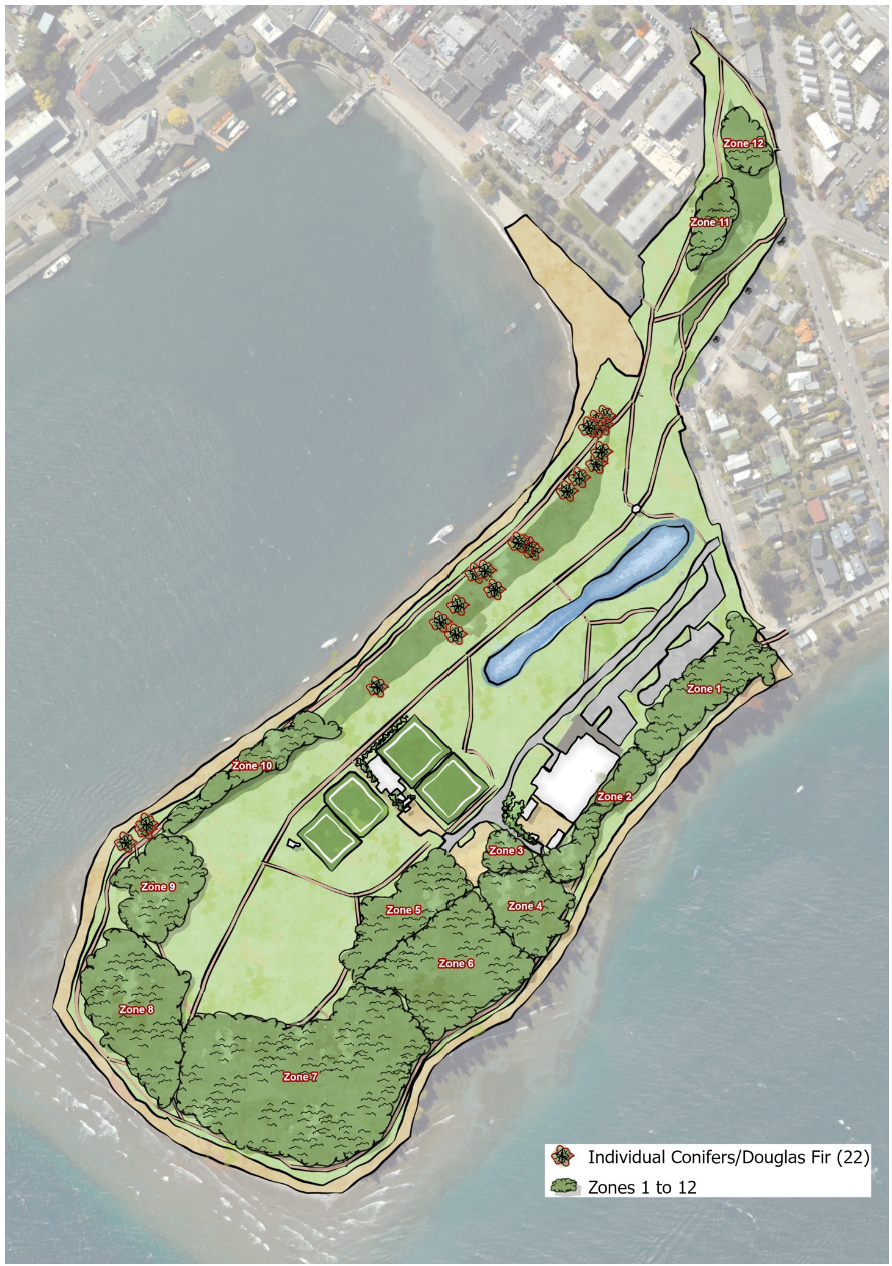
Te Kararo Queenstown Gardens Management Zones
Creating Timelines
With these Zones established, we could then strategically plan individualized sequences of removal and replanting efforts, broken into 10-year “Stages” and 1-year “Phases”. By breaking the plan into smaller segments, we’re able to regularly check in on progress, see what’s working and adapt as needed. It also allows the council to allocate budgets sustainably and accommodate budgetary constraints or other considerations as they arise.
Each Zone will undergo a structured sequence of activities designed to manage removal, replanting and long-term management.
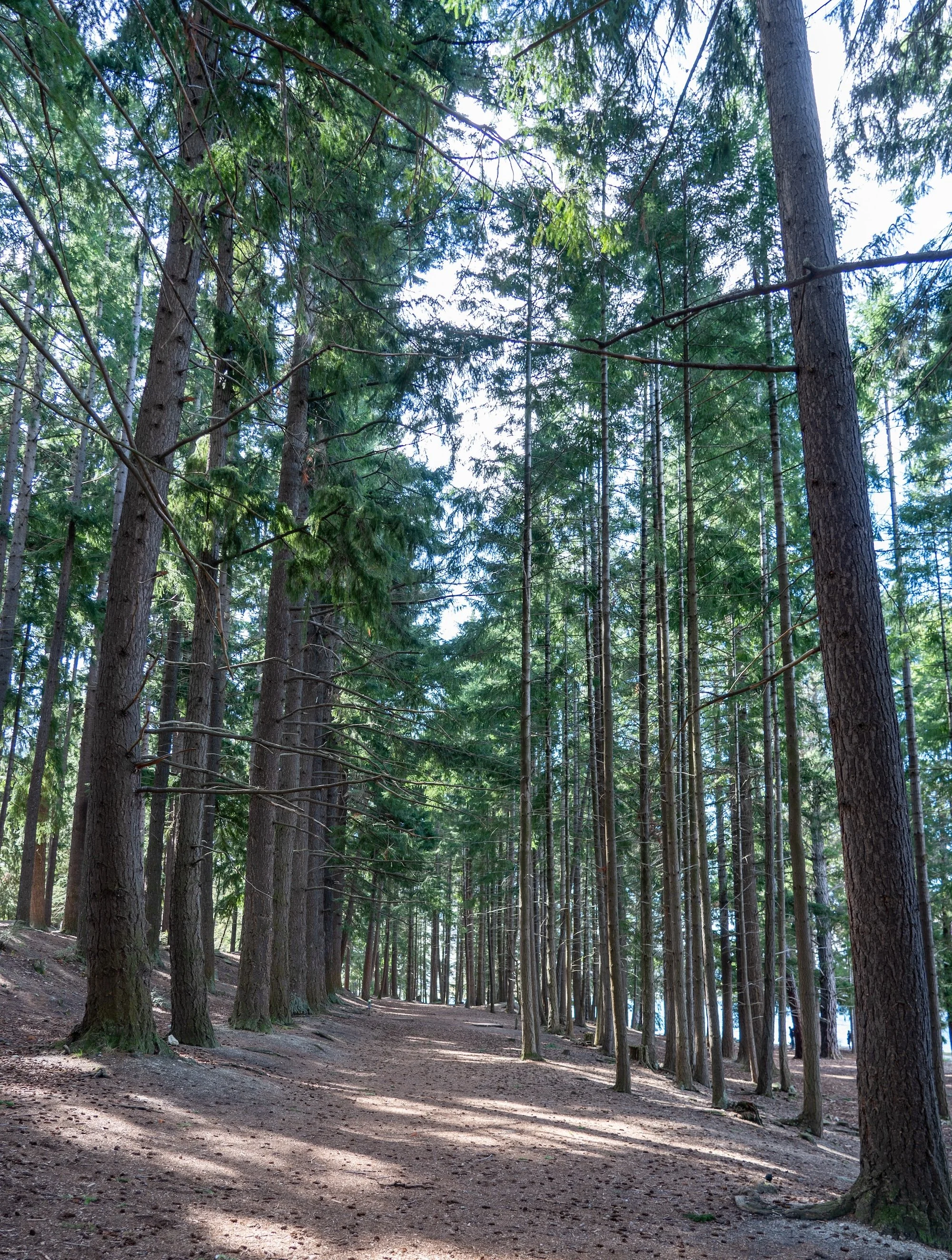
Source: Lee Rowley
Maintenance Activities
Gradual select thinning of shelterbelt conifers in phases
This step allows time for remaining trees to adapt to altered wind loading, reducing risk of windthrow. This ensures visitors can continue to safely enjoy the space throughout the succession process.
Rest Period
Each removal phase will be followed by a minimum 3-year rest period to allow for adaptation and continued assessment and monitoring of remaining trees. During these rest periods, we also can take time to manage the understory.
Replanting of suitable native and exotic species.
Without nearby native seed sources, we need to help nature along by planting desired species to eventually replace the trees we’re removing. We’ll start by improving soil with organic amendments like compost. Then, while planting, we’ll install protective barriers to prevent damage during establishment. After planting, we’ll identify which plants thrive or fail and use this information to plan subsequent planting phases.
Ground Control
With so many wilding seed sources nearby, it’s important to keep on top of their re-establishment in nutrient-rich amended soils. New wilding seedlings will be weeded from planting areas to avoid spread and ensure success of plantings
Assessment/Monitoring
Things change, and adaptability is vital to the success of this plan. Outcomes from each management cycle will be evaluated to inform the next stage, with management strategies adjusted based on data and feedback.
The exact timelines and goals for each zone will depend on site-specific factors like existing trees, wind loading, and nearby land use. This allows us to target the plan to the needs of park users and site managers, with room to monitor progress and adapt over time.
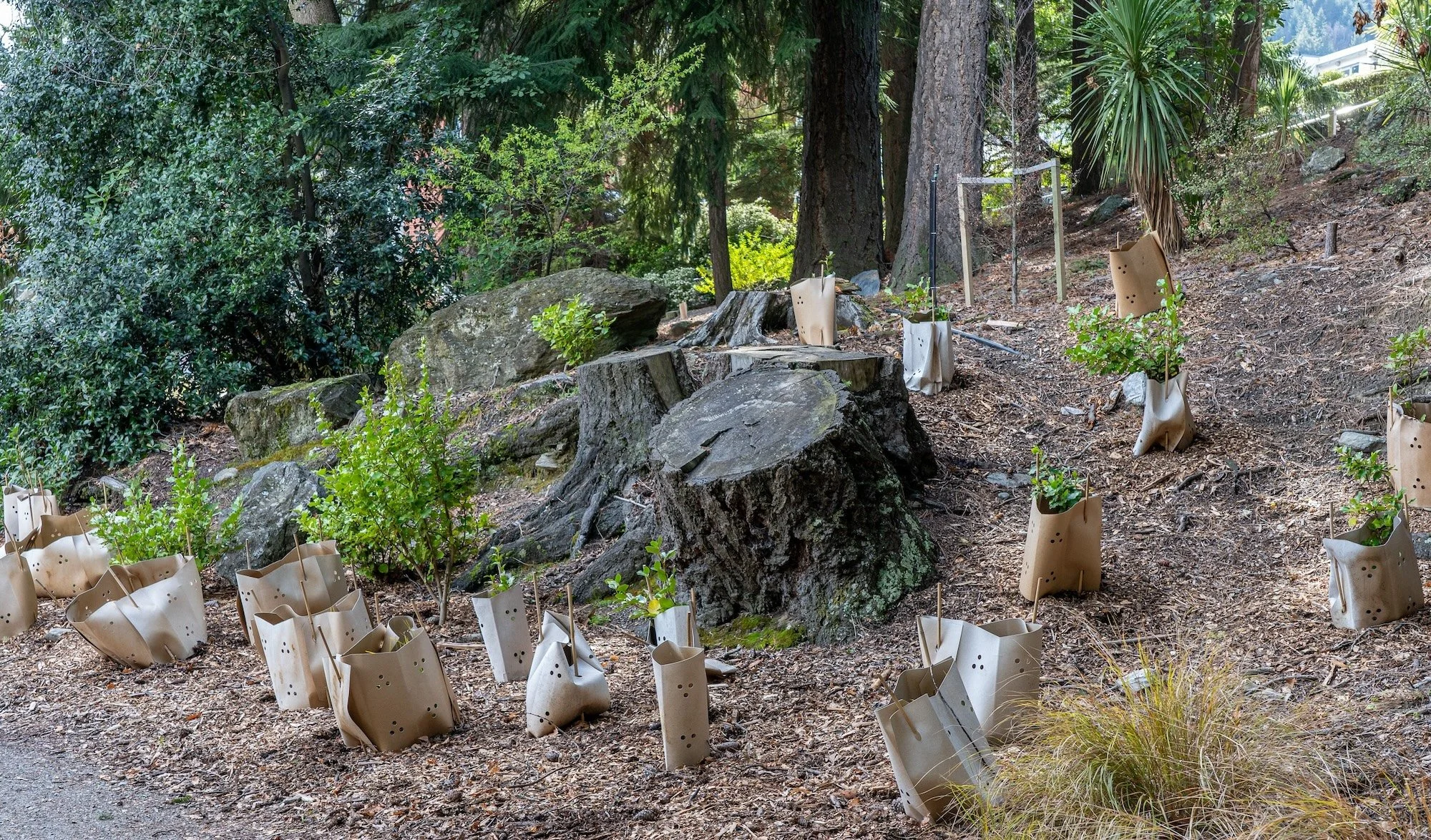
Source: Lee Rowley
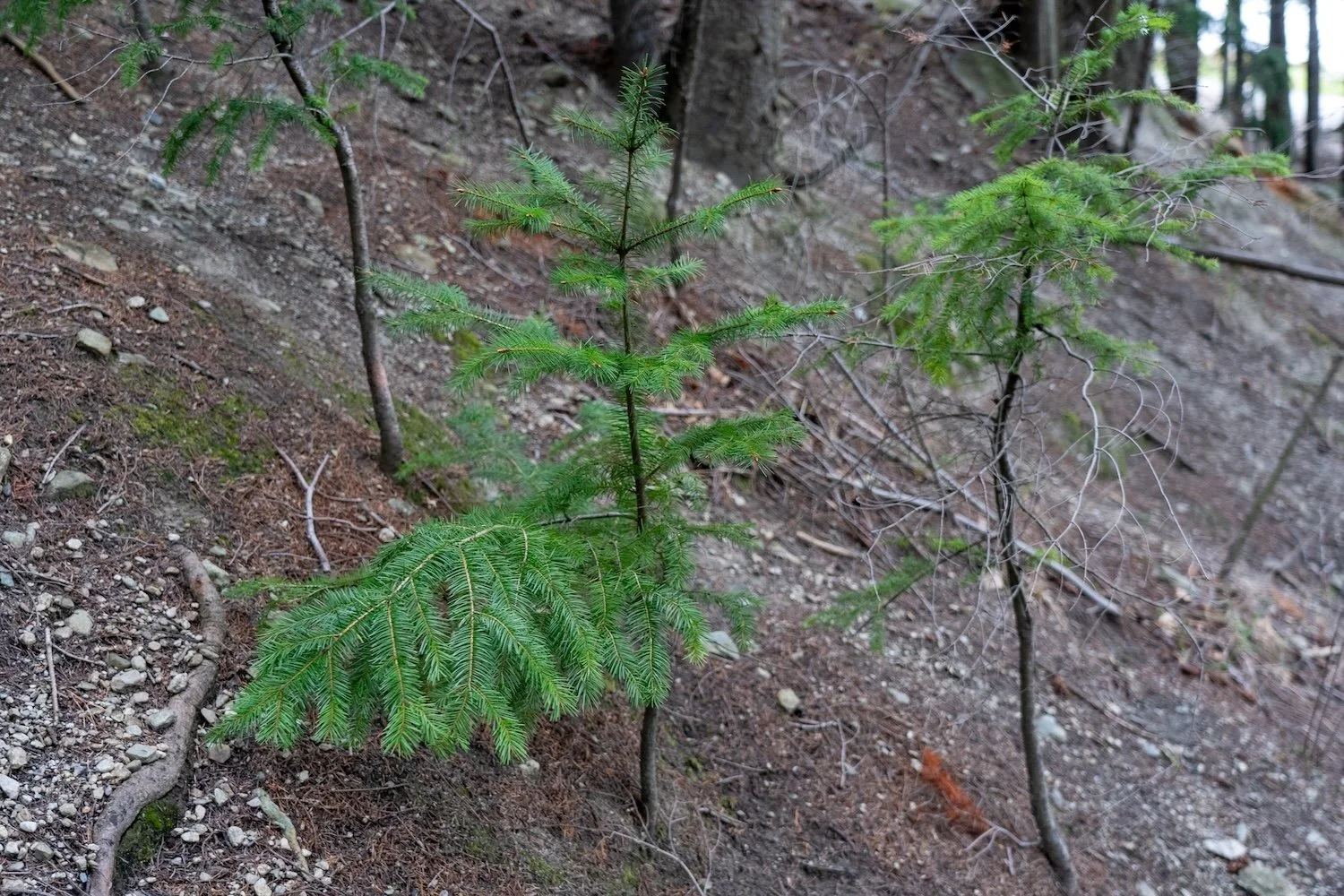
Wilding Douglas-fir seedlings - Lee Rowley
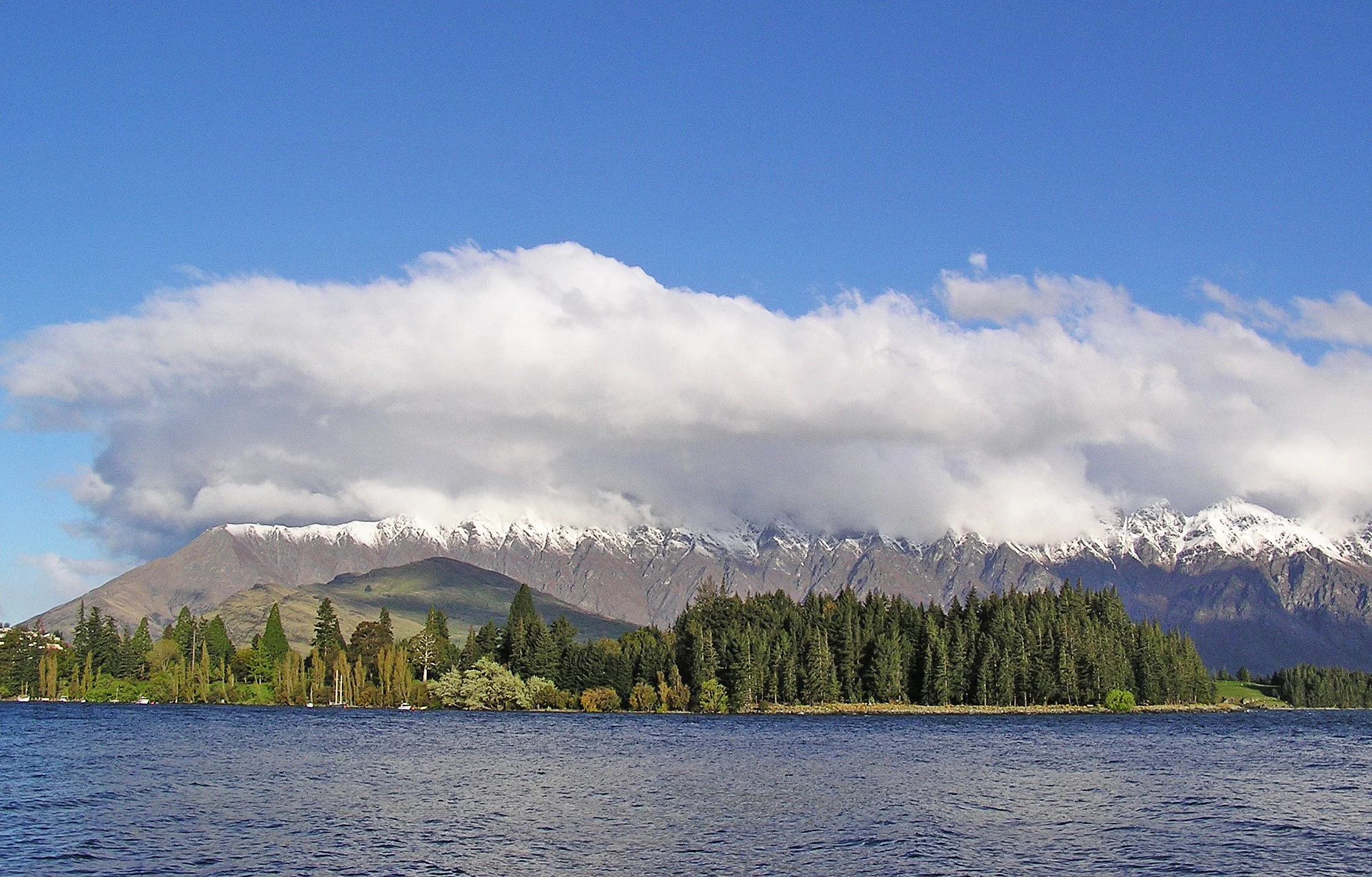
Source: Wikimedia Commons
Nature took its time forming the breathtaking vistas of Queenstown Lakes. Likewise, it will take time to allow Te Kararo Queenstown Gardens and Eely Point Recreation Reserve to become biodiverse public spaces that reflect both ecological and cultural values.
It would be simple if ecosystem restoration was just a matter of removing existing vegetation and replanting what once was. Like everything else in life however, the reality is much more nuanced. In an ever-changing world, we need to create resilient, adaptive systems that we can learn from and build upon. Tend Tree Consultancy prides ourselves on the implantation of data-driven, evidence-based approaches that can grow and change with the environment. Because thankfully, there’s always more to learn.
Click to view our full Te Kararo Queenstown Gardens and Eely Point Recreation Reserve Succession Plans